MoFin · Engineering case study
A visual publishing workflow for a lending website
From a Next.js lending website to an authenticated editor that lets business users maintain content in place.
- Next.js
- React
- TypeScript
- Content modeling
- Versioned publishing
The business problem
A lending website has two kinds of change: business content that staff need to maintain, and application logic such as financial calculations and lead capture. I built the customer-facing website and then a visual editing workflow so content changes did not have to begin as code-editing tasks.
What I owned
As MoFin’s sole engineer, I translated lending requirements into a Next.js, React and TypeScript site with financial calculators and validated lead capture. I added automated content, visual and interaction checks, then built and launched the custom editor in November 2026.
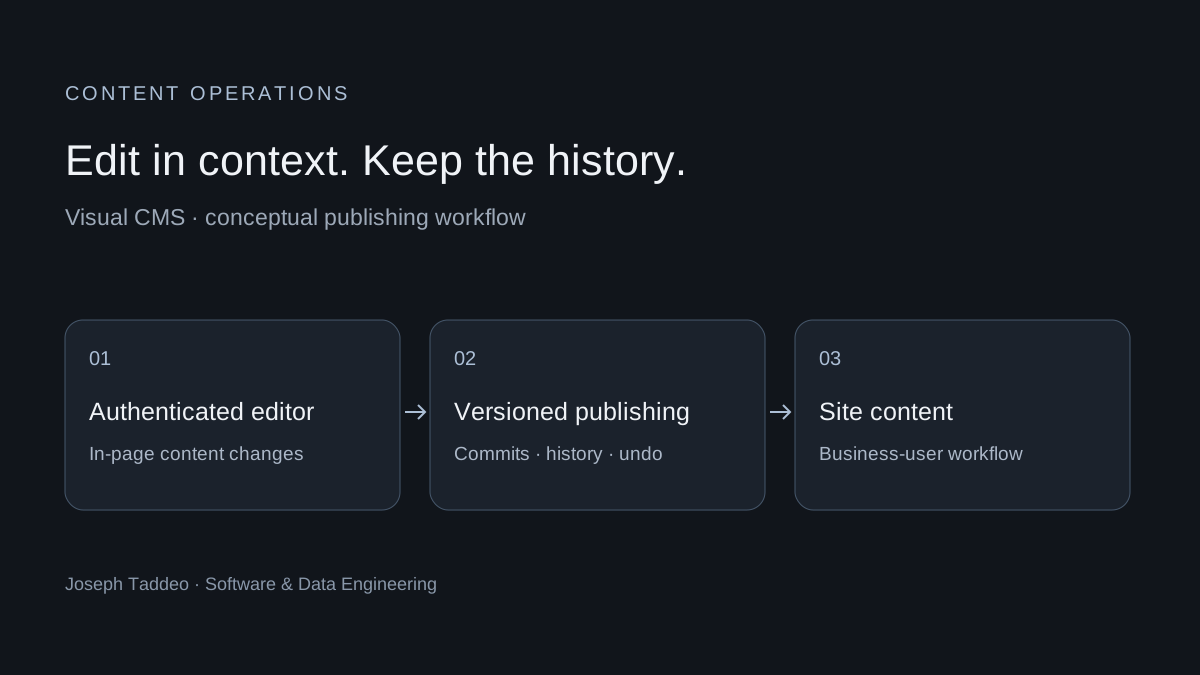
Authenticated in-page editing, versioned publishing, undo history and real-time collaboration.
The engineering decisions
The editor presents content in the page itself rather than asking business users to navigate source files. Changes are published through commits, giving the editing workflow a version history and a way to undo changes.
The editing experience runs on a separate hostname. Authentication, verification codes, publishing limits and password rechecks for administrative changes put controls around who can edit and publish.
The tradeoff
A custom editor gives the business a workflow closely matched to its site, but it also creates software that must be maintained. The launch began with the Home page’s content blocks. Editing coverage and publishing safeguards need to be extended deliberately as the site evolves.
Version history and undo support recovery from content changes. Separate application regression checks cover lending calculations and interactions, which need attention as the underlying software evolves.
What it enabled
Business users gained a visual workflow for changing site content, with authenticated access, collaboration and a recoverable history. The engineering contribution is a usable product capability layered onto the website, alongside its lending calculators and intake workflow.